Omega-3s are not a miracle shortcut. They are essential fats with important roles in the body, and the most useful starting point is understanding the difference between food sources, the types of omega-3, and the claims a supplement can reasonably make.
What are omega-3 fatty acids?
Omega-3 is a family of fats. ALA is found in foods such as flaxseed, chia seeds and walnuts. EPA and DHA are found mainly in oily fish and seafood. The body can convert some ALA into EPA and DHA, but the conversion is limited. A varied eating pattern that includes appropriate omega-3 food sources is a sensible foundation for general nutrition.
Why do EPA and DHA matter?
- Heart health: EPA and DHA contribute to normal body functions; prescription-strength omega-3 medicines may be used for specific blood-triglyceride conditions under medical supervision.
- Brain and eyes: DHA is an important structural component of the brain and retina.
- Inflammation: These fats are involved in processes that regulate inflammation, but this does not mean a supplement treats every inflammatory condition.
Research outcomes vary by person, dose, health status and reason for use. Taking fish oil should not be presented as a way to clear blocked arteries, prevent a heart attack, or replace prescribed treatment.
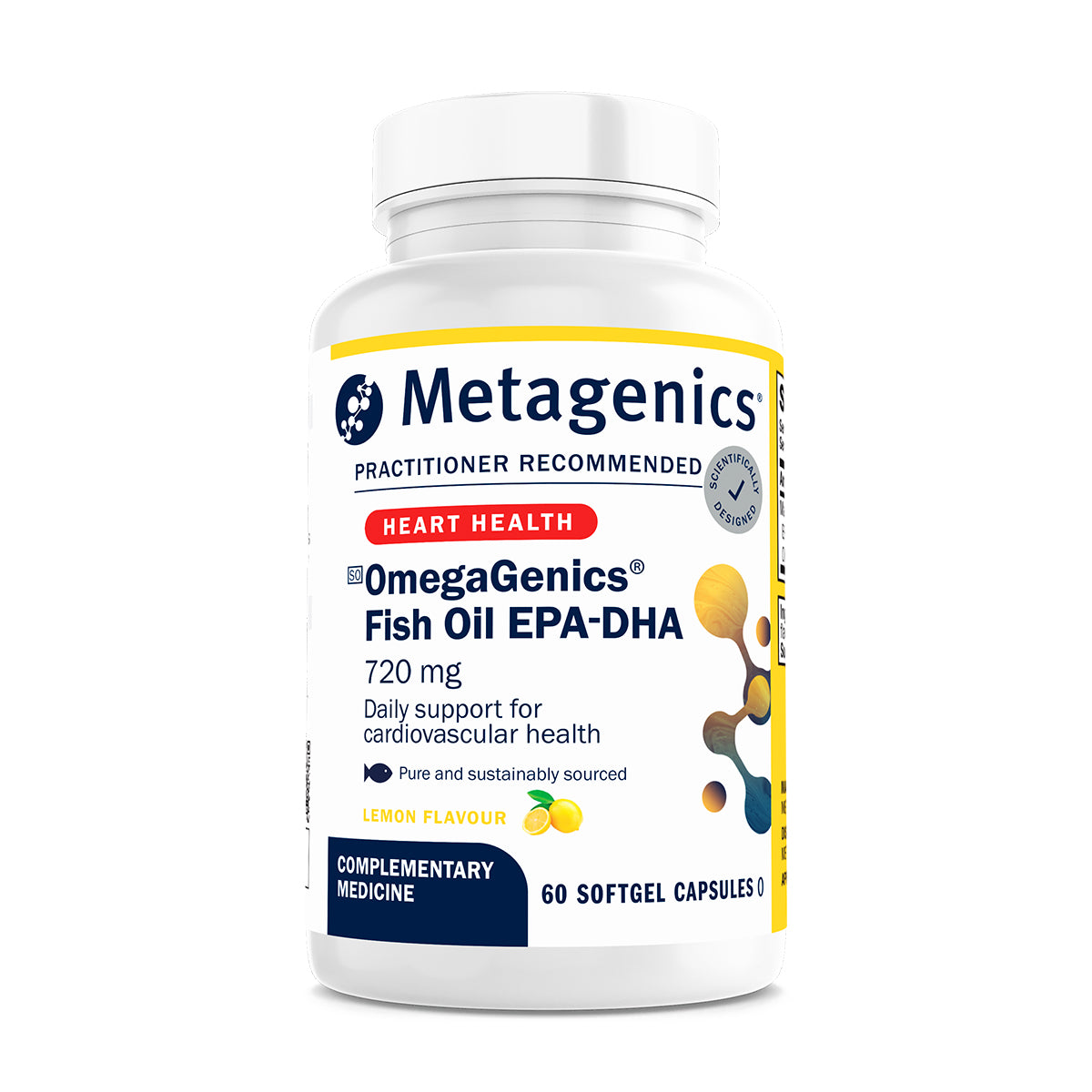
A closer look at Metagenics OmegaGenics Fish Oil EPA-DHA
The retailer listing for this product describes concentrated fish oil supplying EPA and DHA. The 720 mg version lists 430 mg EPA and 290 mg DHA per softgel. The brand also sells other strengths and formats, so check the exact pack size and label: figures and directions can differ between versions.
- Fish-oil source of EPA and DHA.
- Softgel format with lemon flavour listed for the capsule product.
- Contains fish oil and gelatin, so it is not suitable for vegans and may not suit people avoiding fish or animal-derived ingredients.
Food first, supplement second
For many people, food is a practical way to obtain nutrients. Oily fish such as sardines, pilchards, salmon and mackerel provide EPA and DHA; plant foods such as chia, flaxseed and walnuts provide ALA. Whether a supplement is appropriate depends on diet, age, health needs and medicines—not simply on a product’s marketing claims.
Safety checks before use
- Check the label for the exact amount of EPA and DHA, not only the total fish-oil weight.
- Fish oil may be unsuitable for people with fish allergies.
- Ask a doctor or pharmacist before using it if you take regular medication—especially blood-thinning medicines—or have a medical condition, are pregnant or breastfeeding, or are preparing for surgery.
- Do not stop or change prescribed medicines because of a supplement.
This article is general educational information, not personal medical advice. Young people should discuss supplement use with a parent or guardian and a qualified healthcare professional.
Check the current product details
If you are researching this product, review the retailer’s current label, available pack sizes, price, stock and returns information before making a decision.
View product details at the retailer →
Sources and further reading
- Faithful to Nature: Metagenics OmegaGenics Fish Oil EPA-DHA — product details, ingredients and retailer-listed price.
- Metagenics South Africa: OmegaGenics Fish Oil EPA-DHA 1000 mg — manufacturer product information and warnings.
- US National Institutes of Health, Office of Dietary Supplements: Omega-3 Fatty Acids — evidence overview and safety context.