What is ashwagandha, and where does it come from?
Ashwagandha, known scientifically as Withania somnifera, is an evergreen shrub that grows in parts of India, Africa and the Middle East. Its root has a long history of use in Ayurveda and other traditional systems of medicine. The name is often explained as referring to the smell of the root, while “Indian ginseng” is a common nickname—the plant is not actually a member of the ginseng family.
The plant contains compounds called withanolides, which are studied for possible biological effects. Supplements can differ considerably depending on whether they use root, leaves or a combination, and how the extract is prepared. That matters: research on one extract cannot automatically prove that every ashwagandha product will have the same effect.
How might ashwagandha affect the body?
Ashwagandha is often described as an adaptogen, a term used for substances traditionally thought to help the body respond to stress. In clinical studies, researchers have looked at self-reported stress, anxiety symptoms, sleep and cortisol, a hormone involved in the body's stress response.
Some small, short-term studies have found reductions in perceived stress and cortisol levels compared with placebo. A 2024 systematic review and meta-analysis of nine trials involving 558 participants also reported improvements in stress and anxiety measures, while noting the need for more information about long-term use. The studies used different preparations and doses, so the results should not be treated as a guarantee for an individual.
Potential benefits: what the evidence suggests
- Stress: Some standardised extracts may reduce self-reported stress after several weeks of use. Results vary, and a supplement is not a replacement for practical stress-management support or professional care when stress feels overwhelming.
- Anxiety: Some trials report improvements in anxiety scores, but major health agencies describe the evidence as mixed or still developing. Ashwagandha should not replace assessment or treatment for an anxiety disorder.
- Sleep: Limited research suggests it may help some adults with sleep quality or insomnia symptoms. The average benefit appears modest and more research is needed.
- Inflammation and immune function: Laboratory findings and traditional use have prompted research, but there is not enough strong clinical evidence to claim that this product reliably treats swelling or “boosts” immunity in a meaningful, measurable way.
- Blood pressure: It is not an established treatment for high blood pressure. Because it may interact with blood-pressure medicines, anyone using those medicines should ask a clinician or pharmacist before taking it.
What about “restoring the adrenal glands”?
You may see ashwagandha marketed for “adrenal support” or for restoring the adrenal glands after stress. This wording goes beyond the evidence. The adrenal glands make hormones including cortisol, but there is no good clinical evidence that ashwagandha repairs or restores damaged adrenal glands. “Adrenal fatigue” is not a recognised medical diagnosis. Ongoing exhaustion, dizziness or other persistent symptoms deserve a proper medical assessment rather than assuming the adrenal glands need a supplement.
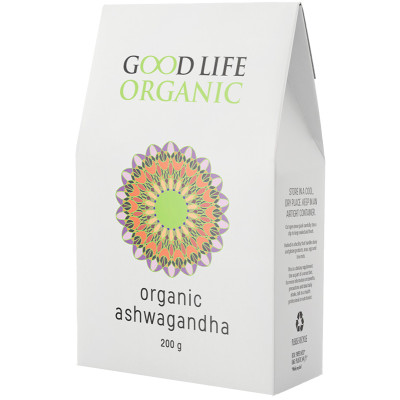
Meet Good Life Organic Ashwagandha Winter Cherry
Good Life Organic Ashwagandha Winter Cherry
This is the product linked through the affiliate button on this page. The previous New Leaf KSM-66-specific pack size, dose, standardisation and price details have been removed because they may not apply to this product.
Check the retailer's current listing and the product packaging for the exact ingredients, pack size, recommended use, certifications and price before purchasing.
View Good Life Organic Ashwagandha ↗This is an affiliate link. Woelag may earn a commission from qualifying purchases, at no extra cost to you. Product details, price and availability may change; check the current retailer listing and packaging.
Is ashwagandha safe for everyone?
No. Short-term studies generally cover up to around three months; safety over longer periods is not well established. Possible side effects include stomach upset, loose stools, nausea and drowsiness. Rare cases of liver injury have been reported, and ashwagandha may affect thyroid function.
- Avoid use during pregnancy and do not use while breastfeeding unless a qualified healthcare professional specifically advises otherwise.
- Speak with a clinician before use if you have a thyroid or autoimmune condition, a liver problem, or hormone-sensitive prostate cancer.
- Ask a GP or pharmacist before use if you take medicines for blood pressure or diabetes, thyroid medication, sedatives, anti-seizure medicines or medicines that suppress immune activity.
- Tell your healthcare team before surgery and follow their advice about stopping supplements.
- Do not use it to replace prescribed treatment or to manage persistently high blood pressure, ongoing anxiety or unexplained fatigue.
Building a calmer routine
A supplement is only one possible part of a wider routine. Regular sleep times, movement that feels manageable, balanced meals, time outdoors and support from trusted people can all help with day-to-day wellbeing. If stress is affecting daily life, sleep or relationships, a healthcare professional can help identify the right support.
Our takeaway
Ashwagandha has deep roots in traditional herbal practice, and early clinical research suggests some extracts may help with perceived stress and sleep for some adults. But the science is still developing. It is not a proven adrenal-restoration treatment, a reliable blood-pressure medicine or a guaranteed immune booster. Read the product label carefully, consider medication interactions and make an informed decision based on evidence rather than promises.
Sources and further reading
- US National Institutes of Health, Office of Dietary Supplements. Ashwagandha: Health Professional Fact Sheet.
- National Center for Complementary and Integrative Health. Ashwagandha: Usefulness and Safety.
- Effects of Ashwagandha (Withania somnifera) on stress and anxiety: A systematic review and meta-analysis (2024). PubMed.
- Faithful to Nature. Good Life Organic Ashwagandha Winter Cherry. Product claims and details may change.
Affiliate disclosure: Woelag may earn a commission from qualifying purchases made through affiliate links, at no additional cost to the reader. Commercial relationships do not determine our summary of the evidence.