What is PSA, and why is it measured?
Prostate-specific antigen, usually shortened to PSA, is a protein produced by cells in the prostate gland. Small amounts enter the bloodstream, and a blood PSA measurement can give a clinician useful information when assessing prostate health.
A raised PSA level can occur for several reasons. It may be associated with benign enlargement of the prostate, inflammation or infection, and prostate cancer. The result needs to be considered alongside a person's age, symptoms, medical history and any further tests recommended by a healthcare professional.
How does Prosta-Check work?
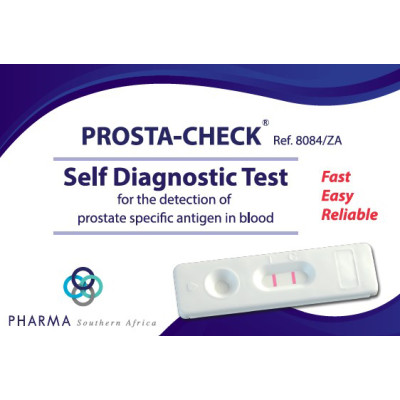
Pharma SA Prosta-Check is a rapid self-test that uses a small sample of whole blood from a finger prick to look for PSA. The manufacturer's leaflet describes the test as detecting levels above approximately 4 ng/mL. It uses a test line and a control line to indicate the result, and the leaflet says to read it at 10 minutes and not interpret it after 15 minutes.
The kit listing includes a test device, plastic pipette, diluent, sterile lancet, alcohol pad and instruction leaflet. Follow the instructions supplied with the exact kit and check the packaging and expiry date before use.
What do the results mean?
- Positive: The test has detected PSA above its screening threshold. Arrange a consultation with a healthcare professional to discuss the result and whether a laboratory PSA test or other assessment is appropriate.
- Negative: The test has not detected PSA above its threshold. It does not rule out every prostate condition or guarantee that cancer is absent.
- Invalid: If the control line does not appear as described in the leaflet, the result cannot be interpreted. Follow the kit's instructions about repeating the test with a new device.
The intensity of the lines is not the key to interpretation; follow the exact line pattern described in the leaflet. Do not delay a medical appointment because of a negative home result if you have symptoms or ongoing concerns.
Making the test part of a prostate-health conversation
Some people value the privacy and convenience of a home screening test, particularly when they want to start a conversation about prostate health. The test is small and lightweight, and its finger-prick format means the sample can be collected at home by following the supplied instructions carefully.
Before testing, check the leaflet's timing advice. It recommends waiting after certain activities or procedures—including ejaculation or prolonged cycling, prostate massage, transrectal ultrasound, cystoscopy, and prostate surgery or biopsy—because these can affect results. The exact waiting periods are listed in the leaflet.
If you have urinary symptoms, pain, a history of prostate problems, or a close relative with prostate cancer, discuss your situation with a healthcare professional rather than relying on a home kit alone. They can help you weigh up whether PSA testing is suitable and what follow-up is needed.
Meet Pharma SA Prosta-Check
Pharma SA Prosta-Check Self Diagnostic Test
Test type: Rapid PSA screening test using a whole-blood sample
Format: Single home test kit with finger-prick sampling components
Use: Follow the enclosed instruction leaflet and storage guidance.
For current availability, price, product details and retailer information, check the product listing.
View productSources and further reading
- Pharma Southern Africa, Prosta-Check instruction leaflet — test threshold, result interpretation, timing and performance information.
- Faithful to Nature, Pharma SA Prosta-Check product listing — kit contents and retailer details.
- National Cancer Institute, Prostate-Specific Antigen (PSA) Test — background on PSA testing and interpretation.
Affiliate disclosure: Woelag may earn a commission from qualifying purchases made through this affiliate link, at no additional cost to you. Product availability, prices and retailer information may change.