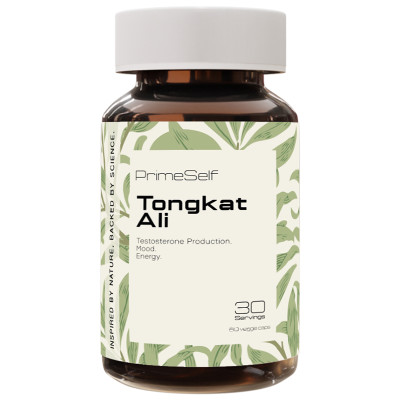
Product image from the Woelag collection. Packaging and retailer information may change; check the current product listing.
What is Tongkat Ali?
Tongkat Ali is a plant native to parts of Southeast Asia. Its root has a history of traditional use, and modern supplements commonly contain a concentrated root extract. The active plant compounds are complex; one compound often discussed in research is eurycomanone.
The word “adaptogen” is often used in supplement marketing to describe herbs said to help the body respond to stress. It is not, by itself, proof that a product reduces stress or improves mood in a reliable, clinically meaningful way. The effects of a specific extract depend on its composition, dose, quality and the people studied.
What is in PrimeSelf Tongkat Ali?
PrimeSelf Tongkat Ali · 60 capsules
The retailer listing describes a South African-made, vegan-friendly product with a standardised Tongkat Ali extract.
- Active ingredient: Tongkat Ali (Eurycoma longifolia) standardised extract, 400 mg per two-capsule serving, standardised to 2% eurycomanone.
- Other ingredients: microcrystalline cellulose and a vegetable-cellulose capsule.
- Pack size: 60 capsules, listed as 30 servings.
- Retail price: R349 at the time checked; prices and stock can change.
- Product features stated by the retailer: vegan-friendly and free from artificial colours, flavours, preservatives and fillers.
Standardisation helps specify the amount of a marker compound, but it does not prove that the finished product delivers a particular health outcome. Product claims should be considered separately from independent clinical evidence.
View productWhat does research say?
Testosterone: promising, but not a guarantee
A 2022 systematic review and meta-analysis assessed clinical trials of Eurycoma longifolia. The authors found a possible increase in total testosterone across the included studies, including some research involving men with low testosterone. However, only a small number of trials could be combined, and the authors called for more research before the herb is used in clinical practice.
A separate review of marketed “testosterone boosters” concluded that most products do not reliably increase testosterone. It described Tongkat Ali as a possible exception in some selected adult populations, rather than a proven solution for everyone. Findings from studies of one extract cannot automatically be applied to every product on the market.
Low testosterone is a medical question, not something to diagnose from tiredness, low motivation or gym progress alone. A healthcare professional can assess symptoms and decide whether appropriate testing is needed.
Stamina, strength and exercise recovery
Tongkat Ali is promoted for stamina, strength, muscle growth and post-exercise recovery. Some studies have explored physical performance, but research is not strong enough to promise that this supplement will reliably build muscle or speed recovery. Training, adequate food, hydration, sleep and a suitable programme remain the foundations of performance.
Stress and mood
Some small studies have explored stress-related measures and mood, but the evidence is still limited. It would be too strong to claim that Tongkat Ali treats anxiety, depression or chronic stress. If mood changes or ongoing stress are affecting everyday life, a qualified health professional can help identify appropriate support.
Sexual health and fertility
Researchers have investigated Tongkat Ali in relation to male reproductive health, but results differ across studies and outcomes. It should not be presented as a proven treatment for infertility, erectile difficulties or low libido. These concerns can have several causes and deserve individual medical advice.
Safety questions to consider
“Natural” does not automatically mean risk-free. Studies of Tongkat Ali have often been small or short, so the full range of possible effects and long-term safety is not well established. People taking prescription medicines, living with a medical condition, or considering a supplement for hormone-related symptoms should discuss it with a qualified healthcare professional first.
- Do not use a supplement to self-treat suspected low testosterone or another medical condition.
- Ask a healthcare professional about possible interactions with medicines and whether the product is appropriate for you.
- Stop using it and seek medical advice if you experience an unexpected or concerning reaction.
- Hormone-related supplements are not appropriate for children or teenagers unless specifically directed by a qualified clinician.
- Buy only products with clear ingredient information and credible quality controls; quality testing does not guarantee a particular benefit.
How does the product label describe use?
The retailer's directions for this product state that it is intended for adults and describe taking two capsules daily with a light meal. The label also advises not exceeding four capsules in 24 hours unless directed by a medical professional. This is a summary of the product listing, not a personal recommendation. Follow the current packaging and get professional advice if you have questions about suitability, medication interactions or side effects.
A thoughtful takeaway
Tongkat Ali is an interesting example of a traditional plant now being studied with modern clinical methods. The evidence around testosterone is promising enough to justify further research, but it is not strong enough to turn broad marketing claims about vitality, muscle, mood and recovery into guaranteed outcomes. Look at the exact extract, the quality of the evidence, possible risks and your own health needs—not just the promise on the label.
Research and further reading
- Leisegang K, Finelli R, Sikka SC, Panner Selvam MK. Eurycoma longifolia (Jack) Improves Serum Total Testosterone in Men: A Systematic Review and Meta-Analysis of Clinical Trials. Medicina. 2022;58(8):1047. Read the full review.
- Do “testosterone boosters” really increase serum total testosterone? A systematic review. Read the review on PubMed.
- PrimeSelf Tongkat Ali product details, including serving size and ingredient information. View the retailer listing.
Health information notice: This article is for general educational purposes and is not medical advice. It does not diagnose, treat, cure or prevent disease. Speak with a qualified healthcare professional about personal symptoms, medical conditions, medicines or supplement use.
Affiliate disclosure: Woelag may earn a commission if you purchase through the product link, at no extra cost to you. This does not change our aim to present research and limitations fairly.