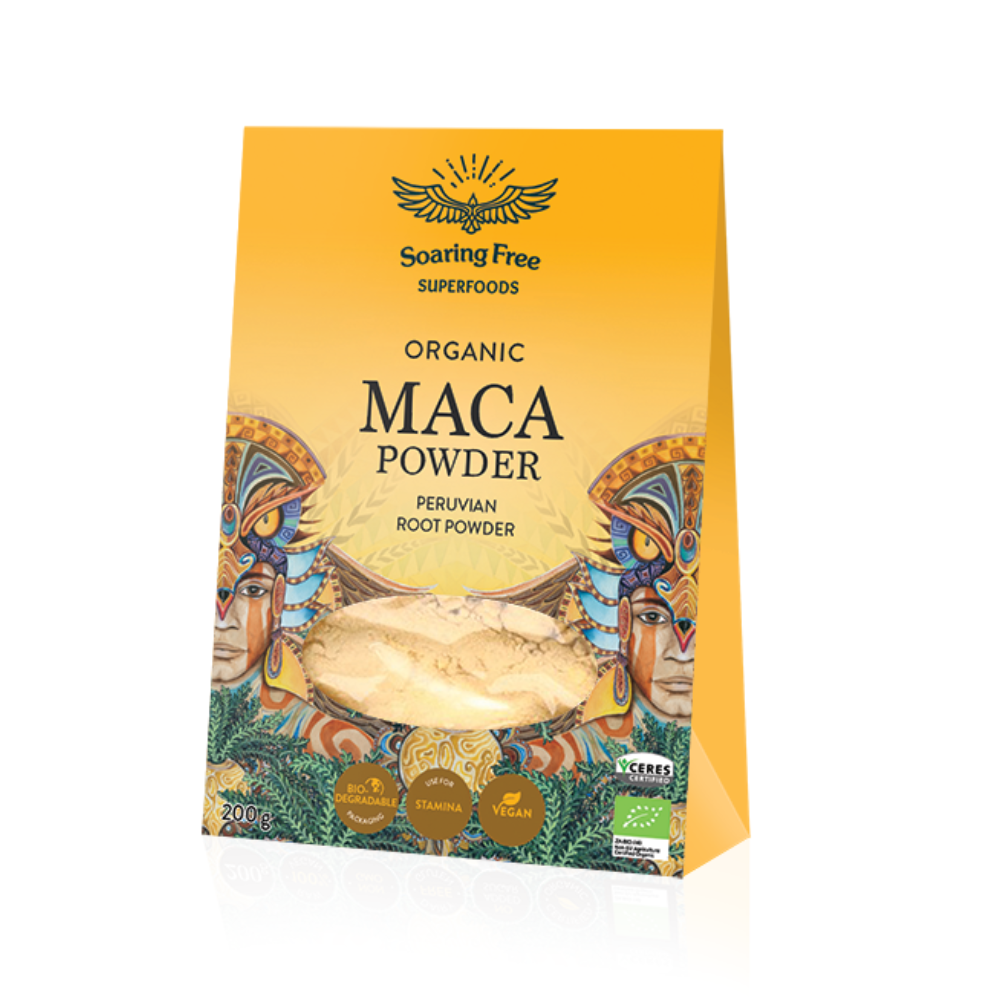
A Woelag botanical visual. See the retailer listing for the exact product packaging and current size options.
What is maca, and where does it come from?
Maca (Lepidium meyenii, also called Lepidium peruvianum in some sources) is a root crop native to the high Andes of Peru, where it grows at high altitude in challenging conditions. The edible root has been used as food for generations and also has a history in traditional practices. Yellow, red and black maca varieties are sold; their composition can differ.
Unlike a concentrated herbal extract, this product is a powder made from organic maca root. It is best understood first as a food ingredient—not as a medicine or a guaranteed hormone treatment. The word “adaptogen” is commonly used in marketing for maca, but the term does not mean that a product has been proven to regulate every body system.
What nutrients does maca contain?
Dried maca root powder mainly provides carbohydrates, with fibre and a modest amount of protein. The Soaring Free product listing describes maca as containing various vitamins, minerals, amino acids and plant compounds. The exact nutrient amounts depend on the variety, growing conditions, processing and serving size, so a long list of compounds should not be read as proof that a normal serving supplies large amounts of each nutrient.
- Carbohydrates: contribute food energy.
- Fibre: contributes to overall dietary fibre intake.
- Plant protein: adds a small amount, but maca powder is not usually a major protein source at typical serving sizes.
- Plant compounds: maca contains macamides, macaenes and other phytochemicals that are being studied, but their effects in people are not fully understood.
Claims about “bioavailable calcium,” enzyme potential or the number of phytochemicals do not by themselves demonstrate a longer lifespan or a specific health outcome. A varied diet remains a more reliable way to obtain a broad range of nutrients.
What benefits are being studied?
Energy and exercise
Maca is often marketed for stamina and vitality, and some people enjoy adding it to a breakfast or smoothie. However, there is not enough strong human evidence to promise a reliable boost in energy, athletic performance or endurance. If tiredness is persistent, it is worth considering sleep, diet, stress and possible medical causes rather than relying on a superfood.
Stress and the “adaptogen” claim
Adaptogen is a popular wellness term, but maca has not been shown to automatically adjust to each person's metabolism or balance the cardiovascular, nervous, lymphatic and muscular systems. Research into maca's effects on stress is limited. It should not be treated as a substitute for medical assessment or support for ongoing stress.
Sexual desire and reproductive health
Small human trials have examined maca and sexual desire in adults, including men and postmenopausal women. A systematic review found only limited evidence because the trials were few and small. Maca has not been proven to reliably increase testosterone, improve fertility, treat erectile dysfunction or correct hormonal disorders. It should not replace an assessment for ongoing reproductive or sexual-health concerns.
Menopause and hormone balance
Some small studies have explored maca for sexual wellbeing and menopause-related symptoms, but results are not strong enough to describe it as a proven hormone balancer. Maca is not a replacement for evidence-based care for menopause symptoms, thyroid conditions or other hormone-related health issues.
Immunity, inflammation and cardiovascular health
Maca contains plant compounds that researchers may study for antioxidant activity, but laboratory findings do not establish that eating maca powder boosts immunity by 10–15%, treats swelling or stabilises blood pressure. It is not a treatment for cardiovascular disease, and there is no good basis to promise that it prevents infections.
Meet Soaring Free Superfoods Organic Maca Powder
Soaring Free Superfoods Organic Maca Powder
Ingredient: 100% organic maca root powder
Sizes listed: 200 g, 500 g and 1 kg
Listed starting price: from R189; price depends on size and may change
Retailer-listed use: add to smoothies, desserts and other foods; the listing suggests 1–2 tablespoons for a smoothie.
The retailer describes this product as organic and free from GMOs, sulfites and artificial additives, and says it contains no palm oil. Check the current packaging for certification details, ingredient information and serving suggestions.
View product at Faithful to Nature ↗This is the product page found for the item. Affiliate tracking has not been confirmed; use a tracked affiliate URL only once it is verified.
How can maca powder be enjoyed?
The retailer describes maca as having a malty flavour. It can be mixed into a smoothie, porridge, yoghurt or a homemade snack. Start by following the pack's directions and use it as a food ingredient rather than assuming that larger amounts bring greater benefits. If you have a medical condition or take regular medication, ask a healthcare professional whether it is appropriate for you.
Safety and pregnancy
Maca is commonly consumed as food, but research on concentrated or long-term supplemental use is limited. People who are pregnant or breastfeeding should not assume that a supplement is safe simply because it is plant-based; seek advice from a qualified healthcare professional before using maca for this purpose. Anyone with a hormone-sensitive condition or ongoing health concern should also discuss regular use with a clinician. Stop using it and seek advice if you notice an unexpected reaction.
Our takeaway
Maca has an interesting Andean history and can be a versatile addition to food. It provides carbohydrates, fibre and some plant protein, while research into potential effects on sexual desire and menopause-related wellbeing remains preliminary. The most responsible approach is to enjoy maca as food if it suits you, while treating claims about hormone balancing, immunity, stress adaptation and lifespan with healthy scepticism.
Sources and further reading
- Systematic review: Maca (Lepidium meyenii) for improving sexual function. PubMed / BMC Complementary Medicine and Therapies.
- Soaring Free Superfoods. Organic Yellow Maca Powder — product and nutrition information.
- Faithful to Nature. Soaring Free Superfoods Organic Maca Powder. Product details and claims may change.
Affiliate disclosure: Woelag may earn a commission from qualifying purchases made through affiliate links, at no additional cost to the reader. Commercial relationships do not determine our summary of the evidence.